Infrastructure Platform

Modular infrastructure. Scalable by design.

An institutional-grade compute and energy platform built on contracted utility capacity and deployed in modular phases against tenant demand — not against speculative interconnection timelines.

Deployment Architecture

An integrated stack from utility to operations.

Each campus layer is engineered to commission in parallel with the layers above and below it — substations land while compute pods are being staged, fiber arrives ahead of network turn-up, and operations come online before tenants energize.

This is what compresses speed-to-revenue: a stack architected for concurrent deployment rather than the sequential dependencies of traditional hyperscale construction.

Wolverine deployment architecture stack Six-layer architecture diagram from utility interconnect at the base to network operations center at the top: Power, Distribution, Compute, Cooling, Network, Operations. Power · Utility Interconnect 52 → 180 MW Distribution · Switchgear & Transformers MV Compute · Modular AI Pods 20–80 kW/RACK Cooling · High-Density Thermal AIR + LIQUID Network · Diverse Fiber Routing [VERIFY] Operations · NOC & Security 24 / 7

Building Blocks

Six modular components, one institutional stack.

AI Compute Containers

Pre-engineered modular pods deployed in phased blocks as tenant demand materializes.

Up to 80 kW/rack

Transformer & Switchgear Yards

Medium-voltage distribution architected for phased build-out toward the portfolio's 180 MW ceiling.

Sized per phase against contracted tenant load.

Battery Energy Storage

On-site BESS for load balancing, peak management, and optional grid-response service revenue.

Sized for tenant load-balancing and peak-management requirements.

Cooling Infrastructure

Air- and liquid-cooled options sized for high-density GPU clusters across multiple workload profiles.

Air + Liquid

Fiber & Network Connectivity

Diverse-path fiber routing engineered for tenant-grade redundancy and inter-campus connectivity.

Diverse-path fiber routing engineered for tenant-grade redundancy.

NOC & Operations

24/7 network operations center, security monitoring, and tenant support functions on-site from Phase I.

24/7 · On-site

Speed to Power

Months, not years.

Speed-to-power comparison Horizontal bar comparison: traditional hyperscale build approximately 36 months versus Wolverine phased deployment under 12 months. 0 6 12 18 24 30 36 Traditional Hyperscale Build start to energized ~36 months Wolverine Deployment Contract to energized < 12 months
The delta is utility readiness plus modular deployment. Traditional hyperscale build timelines are dominated by interconnection queues and on-site concrete construction; Wolverine begins with contracted capacity already in place and deploys modular compute against energized substations.

Build Pipeline

Three phases. Concrete deliverables at each.

Phase I

Active

Initial Energization.

  • Phase I substation interconnect energized; first 52+ MW of contracted portfolio capacity online.
  • Modular AI compute pods staged and commissioned against energized infrastructure.
  • Backup generation and on-site battery storage integrated for tenant resilience.
  • 24/7 NOC, security, and tenant support functions operating from day one.
  • Revenue-generating proof-of-concept supporting early enterprise and AI compute customers.
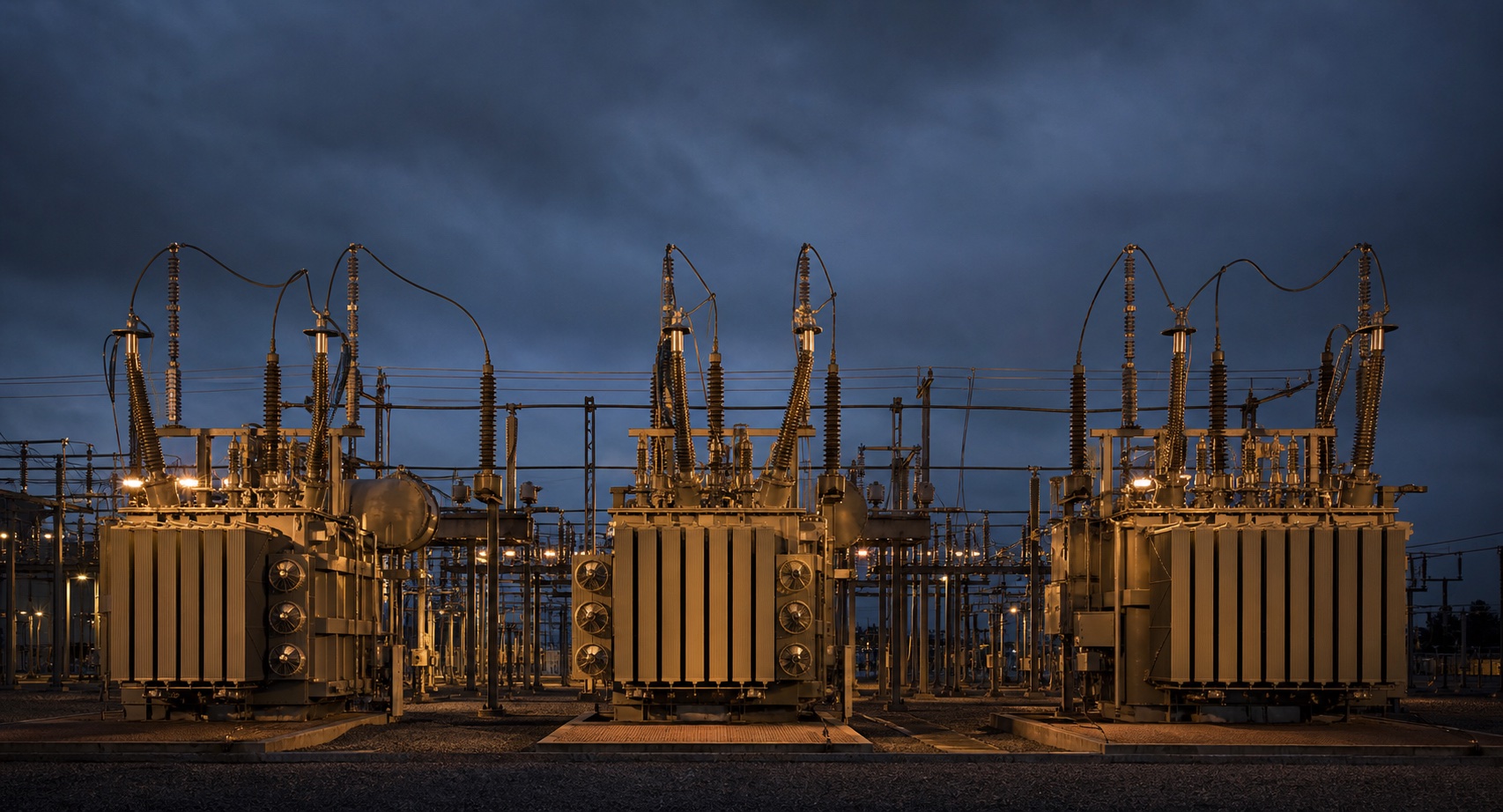
Phase I transformer yard at dusk showing the energized substation infrastructure that anchors the initial 52+ MW portfolio deployment.
52+ MW Portfolio Contracted
<12mo Energization Target
1substation Phase I Interconnect

Phase II

Planned

Multi-Tenant Expansion.

  • Expansion to a multi-tenant compute environment with parallel onboarding capacity.
  • Enterprise AI operators, GPU cloud providers, and infrastructure leasing groups in scope.
  • Infrastructure deployed in modular blocks for phased capital deployment against contracted demand.
  • Additional substation feed energized; portfolio cumulative capacity expanded toward 115 MW.
  • Operational redundancy hardened across power, cooling, and network layers.
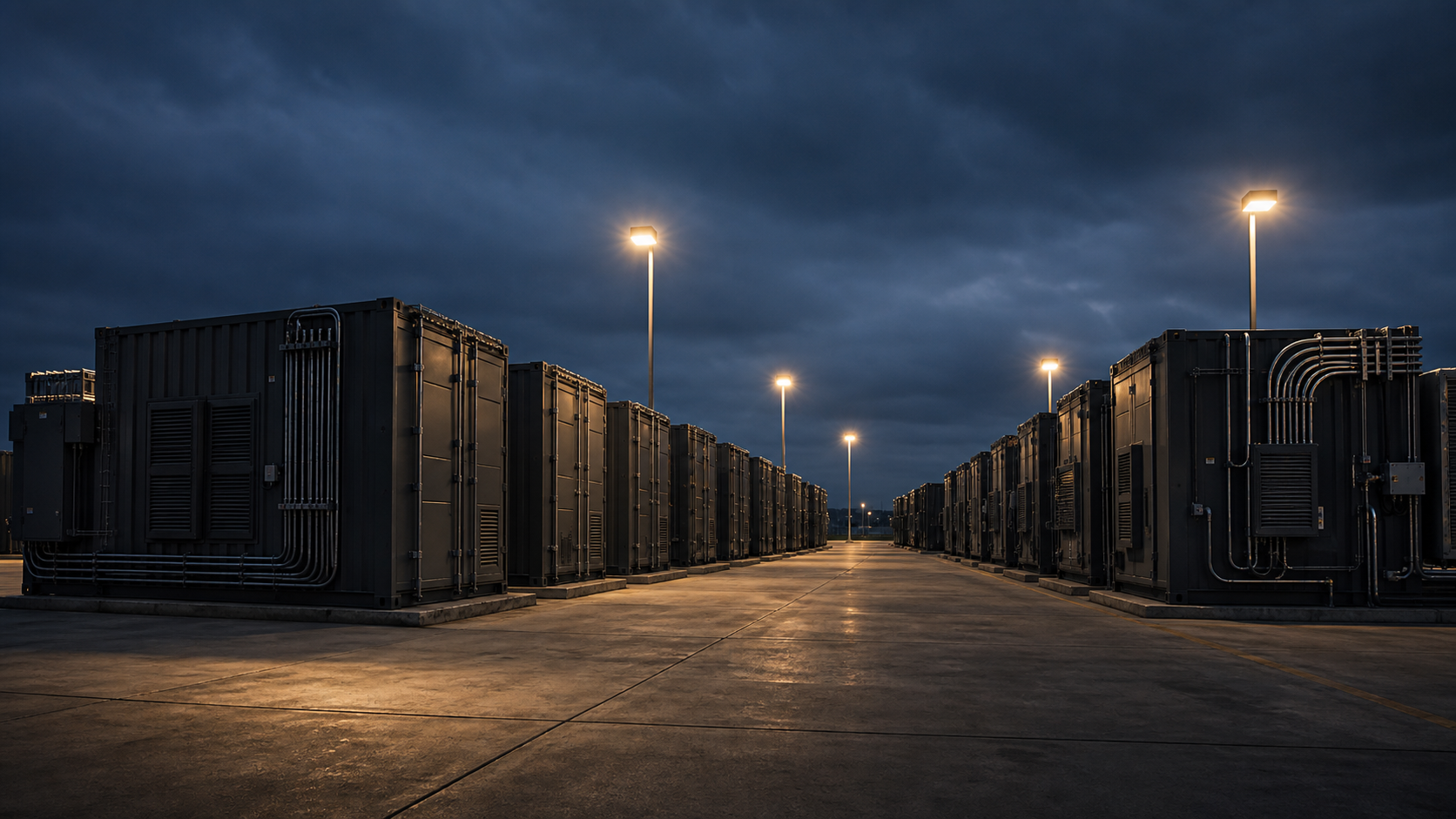
Phase II multi-tenant container yard showing parallel rows of modular compute containers in a dusk industrial yard.
115MW Portfolio Cumulative
<24mo Target Energization
2substations Energized Interconnects

Phase III

Future

Institutional Scale Campus.

  • Hyperscale-ready substation integration and expanded on-site generation capacity.
  • 180 MW portfolio build-out ceiling energized across three substation interconnects.
  • Battery balancing systems sized for utility grid-response participation.
  • Multi-campus operations footprint with long-duration infrastructure asset profile.
  • Platform stabilized as a cash-flowing AI power platform for institutional ownership.
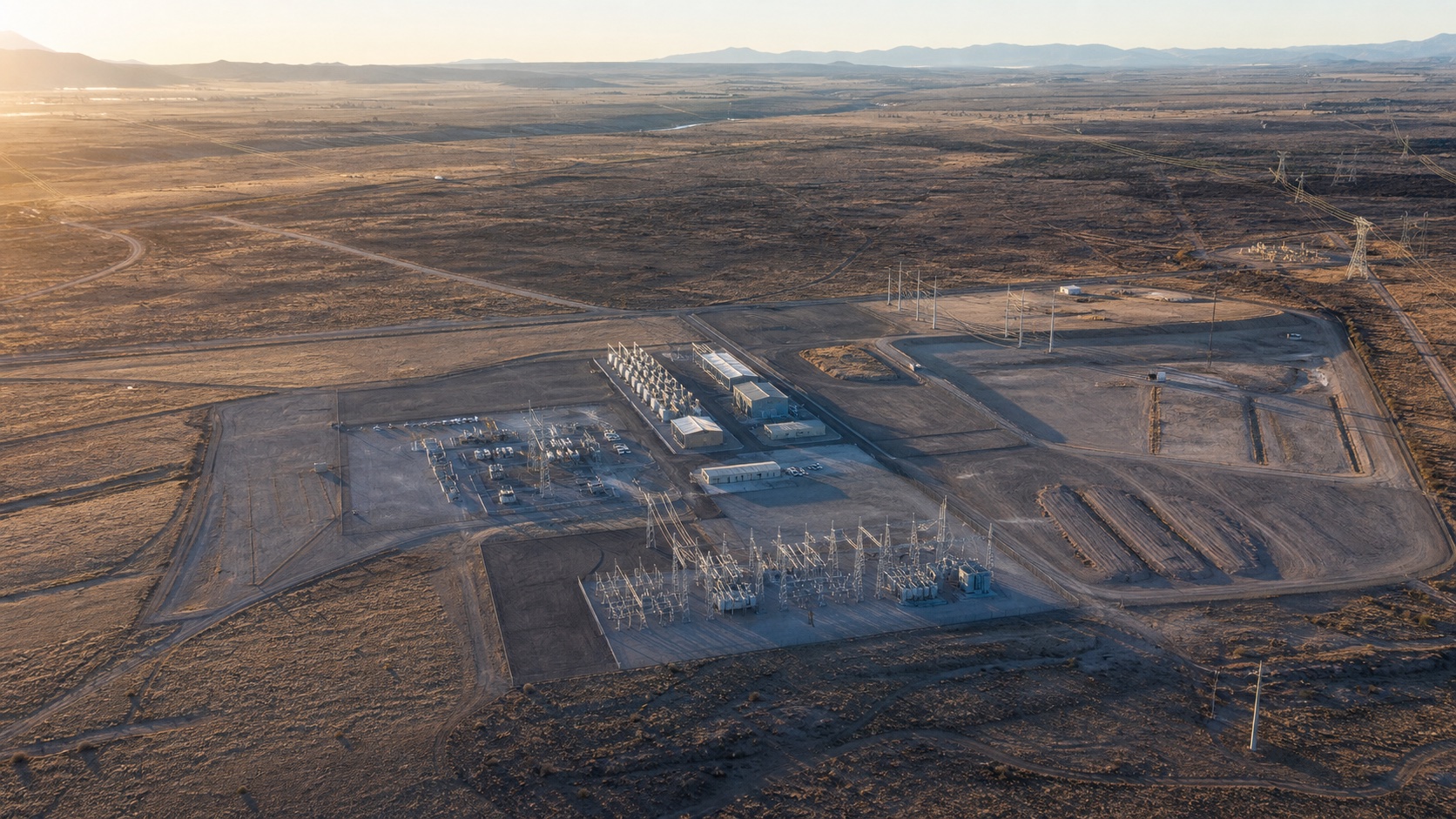
Phase III aerial view at portfolio stabilization, showing the 180 MW portfolio build-out ceiling realized across the institutional-scale footprint.
180MW Portfolio Build-Out
<36mo Stabilization Target
3substations Energized Interconnects

Dig Deeper

Read the power and campus documentation.